
ZenoCloud vs Kinsta: A Straightforward Comparison
Kinsta and ZenoCloud both call themselves managed hosting providers. That is where the similarity ends.
Kinsta is a premium WordPress host built on Google Cloud Platform. It does one thing — WordPress hosting — and does it exceptionally well. If your entire world is WordPress, Kinsta is one of the best options available. Nobody serious about hosting would argue otherwise.
ZenoCloud takes a fundamentally different approach. Built on owned infrastructure spanning 1,000+ servers across India, the US, Europe, and Asia, ZenoCloud manages WordPress, Magento, Laravel, Node.js, Python, and custom application stacks. Every customer gets a named support engineer. Every server is owned and operated by the ZenoCloud team — no cloud provider middleman.
These are different products solving different problems. This comparison lays out the facts so you can make the right decision for your stack, your team, and your budget.
Why This Comparison Matters
If you search for a Kinsta alternative or compare Kinsta vs Cloudways, you will find dozens of generic listicles that skim the surface. Most of them do not address the questions that actually matter when you are choosing a host for a production application: What happens when your site goes down at 2 AM? Can the support team debug a Magento indexing issue, or do they stop at the WordPress boundary? What does your bill look like in INR after twelve months?
This guide is honest about what each platform does well and where it falls short. Kinsta is excellent at WordPress hosting. ZenoCloud is not trying to be Kinsta, and Kinsta is not trying to be ZenoCloud. The right choice depends on what you are building.
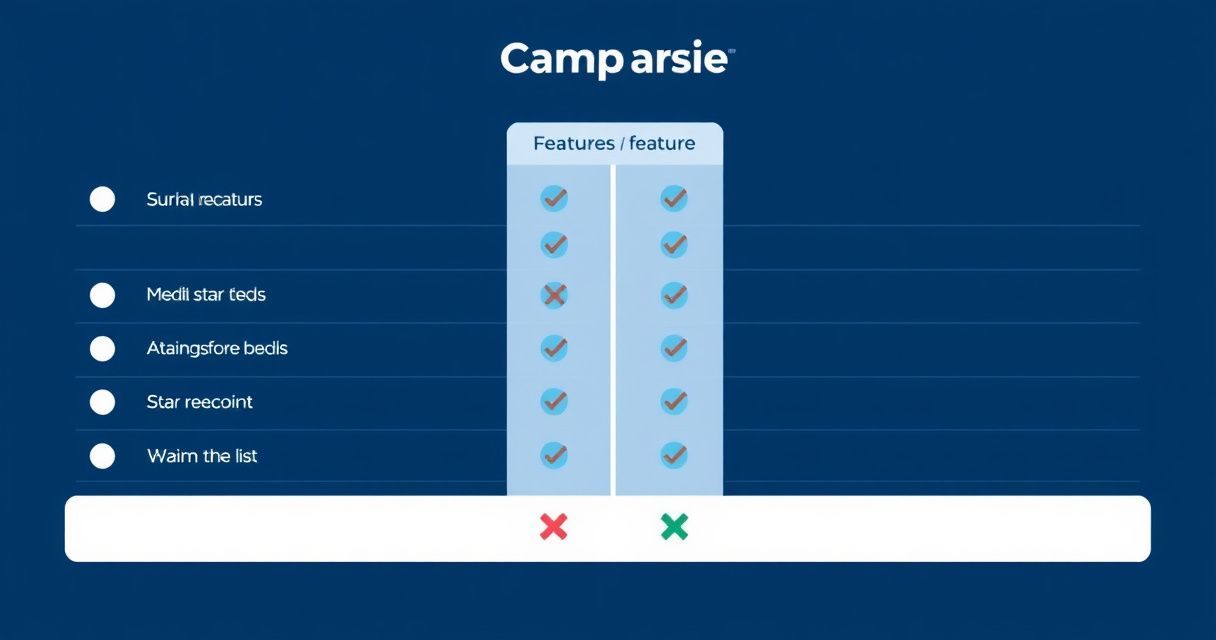
Feature Comparison Table
| Feature | ZenoCloud | Kinsta |
|---|---|---|
| Starting price (USD) | ~$145/mo | $35/mo |
| Starting price (INR) | Rs 12,000/mo | Rs 2,900/mo |
| Infrastructure | Own servers (1,000+) | Google Cloud Platform (C2/C3D VMs) |
| WordPress hosting | Full managed | Excellent (core product) |
| Magento hosting | Deep expertise (10+ years) | Not supported |
| Laravel / PHP frameworks | Full managed | Not supported |
| Node.js / Python | Full managed | Not supported |
| Custom application stacks | Yes | No |
| India data center | Yes (owned) | Yes (via Google Cloud Mumbai) |
| CDN / Edge locations | Cloudflare integration | Cloudflare Enterprise (260+ PoPs) |
| Support model | Named engineer, 24/7 | Team-based chat/ticket, 24/7 |
| Application-level support | Yes (Magento, WP, Laravel, etc.) | WordPress only |
| Staging environments | Yes | Yes (one-click) |
| Automatic daily backups | Yes | Yes (included on all plans) |
| Local development tool | Standard tooling (DDEV, Lando, etc.) | DevKinsta (free, WordPress-specific) |
| Self-serve dashboard | Account portal + direct engineer access | MyKinsta (polished, self-serve) |
| Free migration | Yes, engineer-led, zero-downtime | Yes (limited free migrations per plan) |
| Security (WAF, DDoS) | Included at higher tiers | Cloudflare-based, included |
| Multisite support | Yes | Yes (higher plans) |
| Server-level access (SSH) | Full root/SSH access | SSH access (non-root) |
| PHP version management | Full control | Switchable per site |
| Git deployment | Yes | Yes (GitHub, GitLab, Bitbucket) |
| Uptime SLA | Yes | 99.9% |
| WooCommerce optimization | Yes | Yes |
| White-label / agency program | Yes | Agency partner program |
Performance: Google Cloud vs Owned Infrastructure
Kinsta runs on Google Cloud’s C2 and C3D compute-optimized virtual machines. These are high-performance machines, and Kinsta configures them well for WordPress workloads. Combined with their Cloudflare Enterprise integration providing 260+ edge locations globally, Kinsta delivers fast page loads for WordPress sites.
ZenoCloud runs on its own physical servers. This is not resold cloud infrastructure with a management layer on top. The ZenoCloud team configures every server — hardware selection, network topology, caching layers, and application-specific tuning — for the workload it will run. A Magento server gets Varnish, Redis, Elasticsearch, and MySQL tuning optimized for e-commerce. A WordPress server gets a different configuration. A Node.js application gets yet another.
The performance difference is not about raw compute power. Google Cloud’s C2 machines are fast. ZenoCloud’s bare metal servers are fast. The difference is in how that performance is applied.
Kinsta applies performance at the WordPress layer. Their stack is optimized for WordPress: LXD containers, Nginx, PHP workers tuned for WP, and their own caching layer. If you run WordPress, Kinsta’s performance is hard to fault.
ZenoCloud applies performance at the application layer, whatever that application is. If you run Magento 2 with a catalog of 50,000 SKUs and complex layered navigation, ZenoCloud’s engineering team tunes Elasticsearch indexing, Varnish VCL rules, Redis session handling, and MySQL query patterns specifically for your store’s data and traffic profile. That level of application-specific optimization does not exist at Kinsta because Kinsta does not host Magento.
Verdict: For WordPress, both platforms deliver excellent performance. Kinsta’s Google Cloud infrastructure and Cloudflare Enterprise edge network provide a slight edge in global distribution. For Magento, Laravel, Node.js, or any non-WordPress stack, ZenoCloud wins by default — Kinsta does not support these platforms.
Support: Named Engineer vs Team-Based
This is where the two products diverge most sharply.
Kinsta offers 24/7 support via live chat and ticket. Their support team is knowledgeable about WordPress, and response times are generally fast. Kinsta hires support engineers who understand WordPress at a technical level, not just first-line responders reading scripts. Their support documentation and knowledge base are thorough.
That said, Kinsta’s support is team-based. You interact with whoever is available in the queue. For most WordPress issues, this is perfectly fine — the problem space is well-defined, and a good WordPress engineer can debug most issues regardless of whether they have seen your specific site before.
ZenoCloud operates differently. Every customer is assigned a named support engineer who knows your stack, your deployment history, your traffic patterns, and your business context. When you reach out at 2 AM because your Magento checkout is throwing 500 errors during a flash sale, you reach the engineer who configured your Varnish rules and knows that your payment gateway integration has a timeout setting that needs adjustment under heavy load.
This model scales differently. Kinsta can onboard thousands of WordPress sites because WordPress is a known quantity — the support playbook is deep but narrow. ZenoCloud supports fewer customers per engineer because each customer’s stack is different, and the support relationship is deeper.
For straightforward WordPress hosting, Kinsta’s team-based support is responsive and competent. For complex stacks, Magento stores, or situations where you need someone who understands your specific infrastructure, the named engineer model changes what “support” actually means.
Verdict: Kinsta’s support is excellent for WordPress. ZenoCloud’s support is better for complex or multi-stack environments where context matters. If you have ever been frustrated by explaining your infrastructure from scratch every time you open a ticket, ZenoCloud’s model solves that problem.
Pricing: Different Markets, Different Math
Kinsta and ZenoCloud serve different market segments at different price points, and a direct dollar-to-dollar comparison misses the point.
Kinsta pricing starts at $35/month for a single WordPress site with 25,000 visits, 10 GB storage, and 50 GB CDN bandwidth. The Business 1 plan at $115/month covers 5 sites with 100,000 visits. Enterprise plans run $675/month and above. Kinsta bills in USD regardless of where you are located.
ZenoCloud pricing starts at Rs 12,000/month (approximately $145 USD) for the Starter tier. This includes a dedicated named engineer, multi-stack support, and India-based infrastructure. Growth and Business tiers add enhanced security (WAF, DDoS protection, vulnerability scanning), priority response times, and more resources.
The pricing comparison becomes more nuanced when you factor in what each dollar (or rupee) buys.
With Kinsta at $35/month, you get a single WordPress site on Google Cloud. If you need five sites, you are at $115/month. Ten sites takes you to $235/month. Kinsta’s per-site pricing scales linearly, and overages for traffic spikes can add up.
With ZenoCloud at Rs 12,000/month, you get a managed server that can host multiple applications — WordPress, Magento, Laravel, whatever your stack requires. You are not paying per site. You are paying for managed infrastructure with human support layered on top. For agencies managing multiple client sites or businesses running several applications, the per-site economics can be significantly better.
For Indian businesses specifically: ZenoCloud bills in INR. No exchange rate fluctuations, no international transaction fees, no surprise billing adjustments when the rupee moves. Kinsta bills exclusively in USD, which means Indian customers absorb currency risk on every invoice.
Verdict: Kinsta is more affordable for a single WordPress site. ZenoCloud offers better value for multi-stack environments, agencies managing multiple properties, and Indian businesses that benefit from INR billing. Neither is “cheaper” in absolute terms — they price differently because they deliver different things.
Developer Tools and Workflow
Kinsta has invested heavily in developer experience. MyKinsta is one of the best hosting control panels in the industry — clean, fast, and purpose-built for WordPress. Key features include:
- DevKinsta: A free local WordPress development tool for macOS, Windows, and Linux. Creates local instances with Nginx, PHP, and MySQL that mirror production. Genuinely useful for local-to-production parity.
- One-click staging: Push production to staging or staging to production with a single click.
- Git deployment: Push to GitHub, GitLab, or Bitbucket and deploy automatically.
- WP-CLI and SSH access: Full WP-CLI support and SSH access (non-root).
- APM built in: Identify slow queries, PHP bottlenecks, and external API calls without third-party plugins.
- Edge caching and CDN management: Manage Cloudflare caching rules directly from MyKinsta.
ZenoCloud supports standard local development tools like DDEV, Lando, and native environments for whatever stack you run. There is no equivalent of DevKinsta — the trade-off is flexibility over tight integration.
Where ZenoCloud shines is deployment support for non-WordPress stacks. Need a CI/CD pipeline for zero-downtime Magento 2 deploys? A blue-green deployment for a Node.js application? Your named engineer helps configure and maintain these workflows. At Kinsta, these scenarios do not apply because the platform only supports WordPress.
Verdict: Kinsta wins on self-serve developer tooling for WordPress. MyKinsta and DevKinsta are polished products that make the WordPress development lifecycle smoother. ZenoCloud wins on flexibility — it supports the development workflow of whatever stack you are running, backed by an engineer who helps configure it.
Security
Both platforms take security seriously, but the implementation differs.
Kinsta leverages Cloudflare Enterprise for edge-level security: DDoS protection, a WAF with WordPress-specific rulesets, wildcard SSL, and automatic threat mitigation. At the infrastructure level, Google Cloud network security, isolated LXD containers per site, and automatic malware scanning. Security is included on all plans.
ZenoCloud approaches security from the server level up. At the Starter tier, you get standard security — firewalls, SSH hardening, regular patching. At the Growth and Business tiers, ZenoCloud includes enterprise security features: WAF, DDoS protection, real-time vulnerability scanning, intrusion detection, and proactive monitoring. The named engineer model means security incidents get handled by someone who knows your stack — they can distinguish between a legitimate traffic spike from a promotional campaign and a DDoS attack because they have context on your business.
For Magento stores specifically, ZenoCloud applies PCI DSS compliance guidance and Magento-specific security hardening that Kinsta cannot offer because Kinsta does not host Magento.
Verdict: Both platforms provide strong security. Kinsta’s Cloudflare Enterprise integration is excellent for WordPress-level protection. ZenoCloud’s security goes deeper at the server and application level, particularly for non-WordPress stacks and e-commerce environments where PCI compliance matters.
Who Should Choose Kinsta
Kinsta is the right choice if all of the following are true:
- Your entire application stack is WordPress (including WooCommerce).
- You value a polished self-serve dashboard and do not need an engineer on call.
- Your team is comfortable managing WordPress workflows independently.
- You want Google Cloud’s global infrastructure and Cloudflare Enterprise edge network.
- You prefer a lower entry price and are willing to pay per site as you scale.
- Local development tooling (DevKinsta) is important to your workflow.
- You do not need Magento, Laravel, Node.js, or custom application support.
If you are a WordPress developer, a small business running a single WordPress site, or an agency that exclusively builds WordPress sites, Kinsta is one of the best hosting products available for that use case. Their engineering team understands WordPress deeply, and the MyKinsta dashboard makes day-to-day management genuinely pleasant.
Who Should Choose ZenoCloud
ZenoCloud is the right choice if any of the following apply:
- You run Magento and need a host that understands Magento architecture, not just the server it sits on.
- Your stack includes multiple technologies — WordPress for marketing, Magento for e-commerce, a Node.js API, a Python data pipeline — and you need one host for all of it.
- You want a named support engineer who knows your infrastructure and can be reached directly.
- Your business is based in India and you want INR billing, Indian data centers, and support aligned with IST.
- You are an agency managing diverse client stacks and need a hosting partner, not just a hosting provider.
- Security requirements include PCI compliance guidance, WAF, DDoS protection, and proactive vulnerability management.
- You need zero-downtime migration handled by an engineer, not an automated tool.
ZenoCloud costs more than Kinsta’s entry tier because it delivers more: multi-stack support, owned infrastructure, human support, and application-level expertise. The value proposition is not “cheaper WordPress hosting.” It is “a hosting partner that handles your entire infrastructure so your team can focus on building.”
A Note on Kinsta vs Cloudways
Many people searching for a Kinsta vs Cloudways comparison are really asking a broader question: should I choose a WordPress-specific host or a more flexible managed platform?
Cloudways (now owned by DigitalOcean) positioned itself as a multi-cloud management layer — choose your provider (DigitalOcean, AWS, Google Cloud, Vultr), and Cloudways manages it. Post-acquisition, many users have noticed pricing creep and reduced multi-cloud neutrality.
Kinsta and Cloudways occupy different niches. Kinsta is WordPress-only but deeper. Cloudways was multi-provider but has narrowed post-acquisition. ZenoCloud is multi-stack with owned infrastructure and human support — a fundamentally different model from both.
If you are leaving Cloudways and only need WordPress, Kinsta is an excellent destination. If you are leaving Cloudways and need Magento, Laravel, or multi-stack support, ZenoCloud is built for that migration. We handle the entire transfer — server configuration, application migration, database transfer, DNS cutover — with zero downtime.
The Bottom Line
This comparison does not have a single winner because these products serve different markets.
Kinsta is one of the best managed WordPress hosts available. Google Cloud infrastructure, a polished dashboard, strong developer tooling, and WordPress-focused support make it a premium choice for teams that live entirely within the WordPress ecosystem. If WordPress is all you need, Kinsta earns its price tag.
ZenoCloud serves teams whose needs extend beyond a single CMS. Magento stores, multi-stack applications, Indian businesses needing INR billing, and organizations that want a human relationship with their hosting partner — these are the use cases where ZenoCloud’s model delivers value that a WordPress-only platform cannot match.
The honest recommendation: if you run only WordPress and price is a priority, start with Kinsta. If you run Magento, need multi-stack support, or want a named engineer who knows your infrastructure, talk to ZenoCloud.
Considering ZenoCloud for your hosting? Talk to our engineering team about your requirements. No sales pitch — just a technical conversation about what your stack needs and whether we are the right fit.