
This Is Not an Apples-to-Apples Comparison
Most hosting comparison pages pit two similar products against each other and declare a winner. This is not that kind of comparison.
DigitalOcean is a self-serve cloud infrastructure provider. You get a virtual machine, a clean terminal, and the freedom to build whatever you want. You are the architect, the sysadmin, and the on-call engineer.
ZenoCloud is a managed infrastructure provider. You get a team of engineers who build, secure, monitor, and maintain your servers. You focus on your application and your business.
These are fundamentally different products solving fundamentally different problems. Choosing between them is not about which is “better” — it is about which model fits the way your team works, what you are building, and how much operational responsibility you want to carry.
DigitalOcean: What It Does Well
DigitalOcean deserves credit for what it has built. The platform democratized cloud computing for developers and startups at a time when AWS was the only serious option, and AWS required a PhD in YAML to get anything running.
Pricing transparency. DigitalOcean’s pricing is refreshingly simple. A basic Droplet starts at $4/month for 512 MB of RAM and 10 GB of SSD storage. A production-capable Droplet with 2 vCPUs and 4 GB of RAM runs $24/month. You know exactly what you are paying before you spin anything up. There are no hidden egress charges that surprise you at the end of the month (bandwidth is generous and predictable). For developers bootstrapping a side project or a startup validating an idea, this is exactly right.
Developer experience. The control panel is clean and fast. Spinning up a Droplet takes under 60 seconds. The one-click app marketplace lets you deploy WordPress, Ghost, Docker, or a LAMP stack without touching a terminal. The API is well-documented and consistent. Terraform and Pulumi providers work reliably. The tutorial library is one of the best in the industry — if you search for how to do almost anything on a Linux server, there is a good chance a DigitalOcean community tutorial ranks on page one.
Ecosystem breadth. DigitalOcean is no longer just virtual machines. Managed Kubernetes, managed databases (PostgreSQL, MySQL, Redis, MongoDB), App Platform for container deployments, Spaces for object storage, and a load balancer service round out a capable infrastructure platform. For a developer or small team that wants to self-manage, the building blocks are all there.
Global reach. Data centers in New York, San Francisco, London, Amsterdam, Frankfurt, Singapore, Bangalore, Sydney, and Toronto cover most major markets. Latency to end users in these regions is competitive with any major cloud provider.
DigitalOcean is a genuinely good product for its intended audience: developers and technical teams who want affordable, predictable cloud infrastructure and are comfortable managing it themselves.
ZenoCloud: What It Does Differently
ZenoCloud operates on owned infrastructure — 1,000+ physical servers across data centers in India, the United States, Europe, and Singapore. This is not resold cloud compute with a dashboard on top. The ZenoCloud team selects the hardware, configures the network, manages the operating systems, and tunes the application stack for each customer’s workload.
Named engineer model. Every ZenoCloud customer is assigned a named DevOps engineer. This person knows your stack, your deployment history, your traffic patterns, and your business context. When something breaks, you are not opening a ticket with a stranger. You are reaching the engineer who configured your Nginx rules and knows that your WooCommerce store has a cron job that spikes CPU every night at midnight.
Application-level expertise. ZenoCloud’s team has deep experience with Magento 2 (including Hyva and headless architectures), WordPress at scale, WooCommerce, Laravel, Node.js, Python, and custom application stacks. This is not just “we will keep your server running.” It extends to diagnosing application-level issues — slow database queries, memory leaks in PHP-FPM, broken reindex processes, misbehaving third-party extensions.
Security included. Every ZenoCloud plan includes proactive security monitoring via Wazuh agents, server-level hardening, firewall configuration, malware scanning, and Cloudflare integration. Higher tiers add WAF rules, DDoS mitigation, and vulnerability scanning. Security is not an add-on or an afterthought — it is part of the baseline service.
Pricing model. ZenoCloud’s Starter plan begins at Rs 12,000/month (approximately $145 USD). This is objectively more expensive than a DigitalOcean Droplet. It is also a fundamentally different product. The price includes managed infrastructure, a named engineer, security monitoring, backups, and application-level support. Comparing it to a $4 Droplet is like comparing a meal at a restaurant to the price of raw ingredients at a grocery store — both have their place, but they are not the same thing.
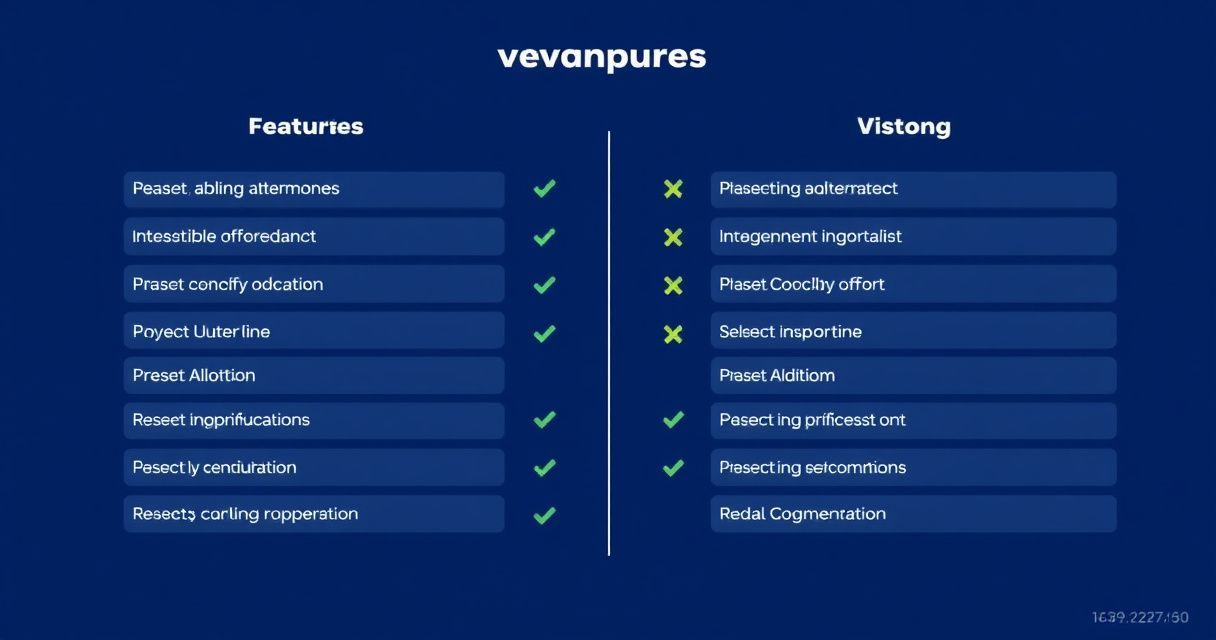
The Comparison Table
| DigitalOcean | ZenoCloud | |
|---|---|---|
| Starting price | $4/mo (basic Droplet) | Rs 12,000/mo (~$145 USD) |
| What you get | A virtual machine | A managed server + engineering team |
| Server management | You do it | ZenoCloud does it |
| OS updates and patching | Your responsibility | Included |
| Security monitoring | Your responsibility (or add third-party tools) | Included (Wazuh, hardening, firewall) |
| Backup management | Droplet snapshots ($0.05/GB/mo) or DIY | Included, automated, tested |
| Support model | Ticket-based, platform-level only | Named engineer, application-level |
| Support scope | ”Your Droplet is running" | "Your Magento store is running” |
| Average response time | Hours (varies by plan) | Minutes (named engineer, direct access) |
| Magento expertise | None (self-manage) | 10+ years, 2,000+ migrations |
| WordPress expertise | One-click install, then self-manage | Full managed, performance-tuned |
| Infrastructure | Shared cloud VMs | Dedicated physical servers (owned) |
| India data center | Bangalore | Yes (owned) |
| CDN | Cloudflare (self-configure) or Spaces CDN | Cloudflare integration, configured for you |
| Monitoring | Basic Droplet metrics | Zabbix across all servers, custom alerts |
| Uptime SLA | 99.99% | Yes |
| Billing currency | USD | INR and USD |
| Control panel / API | Excellent self-serve dashboard + API | Account portal + direct engineer access |
| Kubernetes | Managed DOKS | Available on Enterprise plans |
| Scaling | Manual or API-driven | Engineer-managed, planned scaling |
When DigitalOcean Is the Right Choice
DigitalOcean wins in specific, well-defined scenarios. Acknowledging this honestly is more useful than pretending one product is universally superior.
You are a developer who wants full control. If you enjoy configuring Nginx, writing Ansible playbooks, setting up your own monitoring stack, and handling deployments through your own CI/CD pipeline, DigitalOcean gives you a clean canvas at a fair price. The entire infrastructure is yours to shape.
You are building a SaaS product or internal tool. If your team has DevOps capability and your application is a containerized service running behind a load balancer, DigitalOcean’s managed Kubernetes (DOKS) or App Platform is a strong choice. You get the building blocks without the AWS complexity tax.
You are bootstrapping on a tight budget. A $6/month Droplet running a static site generator, a small API, or a staging environment is hard to argue with on cost. If you are pre-revenue and spending weekends coding, DigitalOcean makes it possible to host real infrastructure for less than the cost of a coffee.
You are running non-critical workloads. Development environments, staging servers, personal projects, hobby sites, bots, cron jobs — workloads where downtime is an inconvenience rather than a revenue loss. DigitalOcean handles these perfectly, and paying for managed hosting would be overkill.
You have a DevOps team. If your organization already employs infrastructure engineers who manage servers, configure monitoring, handle security patching, and run incident response, then you already have the “managed” part covered internally. DigitalOcean gives your team the raw infrastructure at a competitive price.
When ZenoCloud Is the Right Choice
ZenoCloud wins in scenarios where the cost of not having operational support exceeds the cost of the service itself.
You are running a revenue-generating application. If your website or application directly generates revenue — an e-commerce store, a SaaS product with paying customers, a booking platform — the cost of downtime is measured in lost sales, not just frustration. Having a named engineer who can diagnose and resolve issues at 2 AM is not a luxury. It is insurance against revenue loss.
You run Magento or WooCommerce. Magento 2 is one of the most operationally demanding e-commerce platforms in existence. It requires Varnish, Redis, Elasticsearch, RabbitMQ, and careful PHP-FPM tuning to perform well. Running Magento on a DigitalOcean Droplet is technically possible, but keeping it fast, secure, and stable under real traffic requires deep platform knowledge. ZenoCloud has migrated over 2,000 Magento stores and runs this stack daily. WooCommerce at scale has similar demands — database optimization, object caching, page caching, and security hardening that go beyond a WordPress one-click install.
You do not have a DevOps team and do not want to build one. Hiring a competent DevOps engineer in India costs Rs 8-15 lakh per year. In the US, you are looking at $120,000-$180,000 annually. ZenoCloud at Rs 12,000-50,000/month gives you access to experienced infrastructure engineers at a fraction of the cost of a full-time hire. For small and mid-sized businesses, this math is straightforward.
Security and compliance matter. If you are handling customer payment data, personal information, or operating in a regulated industry, the security baseline matters. ZenoCloud’s included Wazuh monitoring, server hardening, and proactive patching provide a security posture that would require significant time and expertise to replicate on a self-managed Droplet.
You have been burned by self-managed infrastructure. If you have experienced a security breach on an unpatched server, lost data because backups were not tested, or spent a weekend debugging a production outage instead of running your business, the value of managed hosting becomes very clear very fast.
You need someone who speaks your application’s language. DigitalOcean’s support can tell you whether your Droplet is running. ZenoCloud’s support can tell you why your Magento catalog page is loading in 8 seconds instead of 2, and fix it. The scope of support is fundamentally different.
The Hidden Cost of DIY
The $4/month Droplet is real. But the total cost of running production infrastructure on DigitalOcean is higher than the Droplet price alone. This is not a knock on DigitalOcean — it is a reality of self-managed infrastructure regardless of the provider.
Your time has a cost. Every hour you spend configuring a firewall, debugging an Nginx 502 error, setting up automated backups, or responding to a downtime alert is an hour you are not spending on your product, your customers, or your business. For a solo developer working on a side project, this time is educational and enjoyable. For a business owner running an e-commerce store, it is a distraction from what actually generates revenue.
Security is not optional. An unmanaged server exposed to the internet without proper hardening, monitoring, and patching is a liability. The average cost of a data breach for a small business is significant, and the reputational damage can be worse than the direct financial impact. Setting up proper security on a Droplet requires knowledge, tools, and ongoing attention.
Monitoring and alerting. DigitalOcean provides basic Droplet-level metrics. Production applications need application-level monitoring, log aggregation, uptime checks, and alerting. Tools like Datadog, New Relic, or self-hosted alternatives add cost and configuration overhead.
Backups that actually work. DigitalOcean offers Droplet snapshots and volume backups, but you are responsible for ensuring they run, verifying they are restorable, and managing retention. A backup strategy that has never been tested is not a backup strategy.
None of this is unique to DigitalOcean. These are the operational realities of running any self-managed infrastructure. The question is whether you want to handle them yourself or pay someone to handle them for you.
A Note on Pricing Philosophy
DigitalOcean and ZenoCloud price fundamentally different products. Comparing them on price alone is misleading.
DigitalOcean prices infrastructure. You pay for compute, storage, and bandwidth. What you build on that infrastructure and how you manage it is your responsibility. The model is efficient and scales linearly.
ZenoCloud prices outcomes. You pay for a server that stays up, stays fast, stays secure, and has a human being responsible for it. The infrastructure cost is bundled with engineering time, monitoring tools, security tooling, and operational expertise.
For an Indian business billing in INR, ZenoCloud’s pricing also eliminates foreign exchange risk. Rs 12,000/month is Rs 12,000/month regardless of what the dollar does. This matters more than most comparison articles acknowledge, especially for small businesses managing tight cash flows.
The Honest Answer
If you are a developer or a technical team that enjoys managing infrastructure, has the skills to do it well, and values full control at a low price point, DigitalOcean is an excellent choice. It is one of the best developer-focused cloud platforms available, and its pricing, documentation, and UX are genuinely best-in-class.
If you are a business that needs its infrastructure to work reliably without building an internal DevOps capability, if you run Magento or WordPress at a scale that demands specialized knowledge, or if you want a named human being who is accountable for your uptime, ZenoCloud is built for that.
The worst decision is choosing the wrong model for your situation. A business owner trying to self-manage a Magento server on a Droplet will waste time and court risk. A developer paying for managed hosting to run a personal blog is overspending for what they need.
Know what you are building, know what your team can handle, and choose accordingly.