

The DevOps Hire That Breaks Your Budget
Every growing Indian tech company hits the same wall. Your application is in production. Traffic is climbing. Deploys are manual and terrifying. Someone pushed a config change on Friday evening and the site went down for three hours. The CEO asks why monitoring did not catch it. The CTO says you need a DevOps engineer. HR posts the job listing. Three months and forty interviews later, you have either hired nobody or hired someone at Rs. 25 to 40 lakh per year who will spend the first six months untangling the mess before they can build anything forward-looking.
This is the reality for hundreds of Indian startups, SaaS companies, and mid-market businesses. The DevOps talent market in India is brutally competitive. Senior engineers with real production experience command premium salaries. Junior engineers are available but need 12 to 18 months of mentoring before they can handle incident response independently. And even after you make the hire, one person cannot cover CI/CD, infrastructure as code, monitoring, security hardening, scaling, and on-call rotations without burning out within a year.
DevOps as a Service exists to solve this exact problem. Instead of hiring a team, you outsource your infrastructure operations to a provider that already has the engineers, the tooling, and the battle-tested playbooks. You get the output of a DevOps team without the hiring timeline, the salary overhead, or the single-point-of-failure risk of relying on one person.
This guide covers what DevOps as a Service actually includes, how it compares to in-house hiring on cost and capability, what ZenoCloud delivers at each pricing tier, and how to decide whether outsourcing or hiring is the right move for your stage.

What DevOps as a Service Actually Means
DevOps as a Service (DaaS) is not a monitoring dashboard you log into. It is not a chatbot that answers infrastructure questions. It is a team of experienced engineers who manage your infrastructure operations end-to-end, on your servers, using your tools and workflows, with SLAs that define response times and resolution guarantees.
The scope typically covers six core areas.
1. CI/CD Pipeline Design and Management
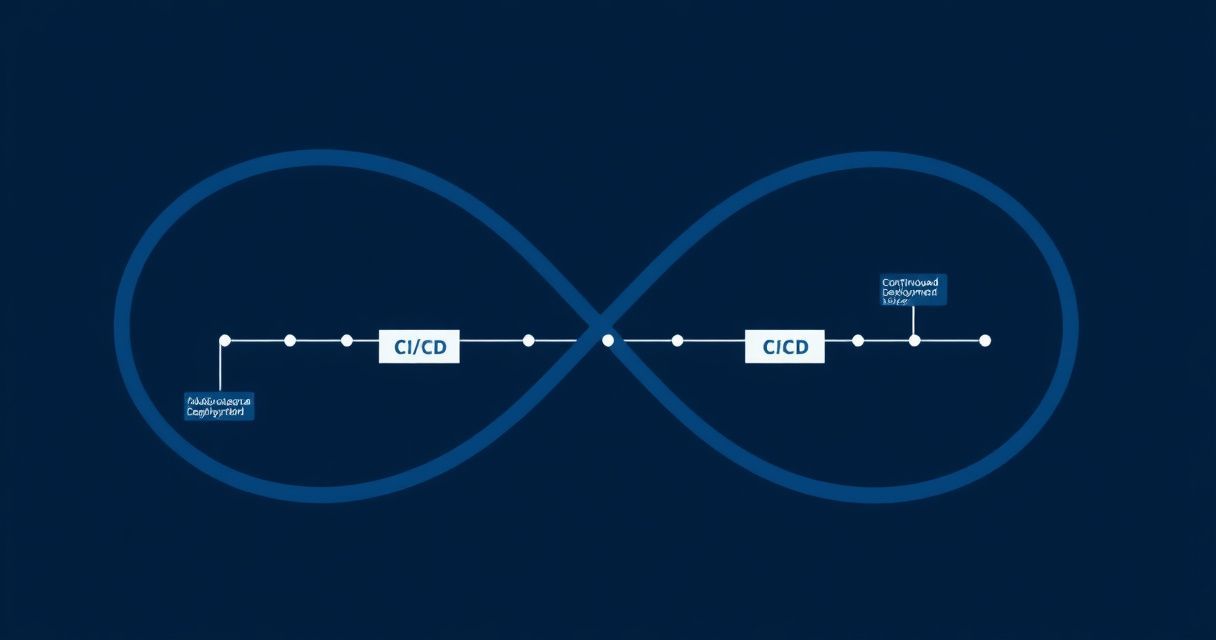
Your code goes from commit to production through an automated pipeline. The DevOps team designs, implements, and maintains this pipeline -- build stages, automated testing, staging deployments, production releases, rollback procedures.
This means configuring tools like GitHub Actions, GitLab CI, Jenkins, or ArgoCD. It means writing pipeline definitions that handle your specific stack -- whether that is Next.js with Django, a monolithic Laravel application, or microservices on Kubernetes. Branch protection, environment-specific configs, deployment approval workflows.
Most importantly, someone is responsible when the pipeline breaks. When a build fails at 11 PM because a dependency updated and broke compatibility, the DevOps team fixes it -- not your application developers.
2. Infrastructure as Code (IaC)
Every piece of your infrastructure is defined in version-controlled code. Servers, load balancers, databases, DNS records, firewall rules, auto-scaling policies -- all of it exists as Terraform, Ansible, or CloudFormation templates that can be reviewed, tested, and reproduced.
This eliminates the problem of infrastructure drift, where production slowly diverges from what anyone thinks it looks like because changes were made manually through cloud dashboards. It also means disaster recovery is not theoretical. If your entire production environment disappears tomorrow, the DevOps team can rebuild it from code in hours, not weeks.
3. Monitoring, Alerting, and Observability
A proper monitoring stack covers four layers: infrastructure metrics (CPU, memory, disk, network), application metrics (response times, error rates, throughput), log aggregation (centralized, searchable, correlated), and synthetic monitoring (uptime checks from external locations).
The DevOps team deploys and configures these systems -- Prometheus and Grafana for metrics, ELK or Loki for logs, uptime monitors for external checks. More critically, they tune alerting rules so your on-call rotation gets paged for genuine incidents, not noise. Alert fatigue kills incident response faster than any technical failure.
At ZenoCloud, we use Zabbix for infrastructure monitoring and Wazuh for security event detection as part of the managed stack. Thresholds are tuned to your workload patterns, with escalation paths that get a P1 to an engineer in under 15 minutes for managed clients.
4. Incident Response and On-Call Coverage
When production goes down at 3 AM, someone needs to respond. With an in-house hire, that someone is your single DevOps engineer, who is also supposed to sleep, take vacations, and occasionally have a life outside of work.
DevOps as a Service provides a rotation of engineers covering incidents around the clock. The SLA defines response times: how quickly someone acknowledges the alert, begins investigation, and communicates status to your team. Post-incident, you get a root cause analysis and a remediation plan to prevent recurrence.
This is where the cost comparison becomes stark. A single senior DevOps engineer provides one person's coverage. A managed service provides a team's coverage, including holidays, sick days, and the institutional knowledge that survives when any individual leaves.
5. Scaling and Performance Optimization
Your application needs to handle traffic spikes without falling over and scale back down without wasting money on idle resources. The DevOps team configures auto-scaling policies, load balancer rules, caching layers, and database connection pooling.
They also conduct periodic performance reviews -- analyzing slow queries, identifying memory leaks, optimizing container resource limits, and recommending architectural changes when your current setup is approaching its ceiling. This is proactive work that prevents incidents rather than reacting to them.
6. Security Hardening and Compliance
Infrastructure security is ongoing work: patching operating systems, rotating credentials, reviewing firewall rules, scanning for vulnerabilities, configuring WAF rules, managing SSL certificates, and ensuring compliance with SOC 2, ISO 27001, or India's DPDP Act.
The DevOps team handles all of this as part of the service. Security patches applied within defined windows. Vulnerability scans on schedule. Access controls reviewed and tightened. Regular compliance reports without needing a separate security team.
The Math: In-House DevOps vs. Outsourced
The most common objection to DevOps as a Service is that it feels expensive. But the comparison is not the monthly service fee versus zero -- it is the service fee versus the true cost of hiring and retaining an in-house team.
Cost of Hiring In-House
| Component | Annual Cost (INR) |
|---|---|
| Senior DevOps Engineer salary (India) | 25,00,000 to 40,00,000 |
| Recruitment costs (agency fees, interview time) | 2,00,000 to 4,00,000 |
| Tooling licenses (monitoring, CI/CD, security) | 3,00,000 to 6,00,000 |
| Training and upskilling | 1,00,000 to 2,00,000 |
| Management overhead (reviews, 1:1s, planning) | 1,50,000 to 3,00,000 |
| Backup coverage (consultant or second hire) | 5,00,000 to 12,00,000 |
| Total annual cost | 37,50,000 to 67,00,000 |
The backup coverage line is the one most companies forget. A single DevOps engineer is a single point of failure. When they are on leave, sick, or quit with two weeks notice, you have zero coverage. The realistic cost of in-house DevOps includes either a second hire or retainer consultants for continuity.
Cost of DevOps as a Service (ZenoCloud)
| Tier (Cloud Management) | Monthly Cost (INR, from) | Annual Cost (INR, from) |
|---|---|---|
| Foundation | 75,000 | 9,00,000 |
| Growth | 1,50,000 | 18,00,000 |
| Critical or Portfolio | 3,00,000 | 36,00,000 |
At the Foundation tier, you are spending Rs. 9 lakh per year versus Rs. 37.5 lakh minimum for an in-house hire. Even at the Critical tier, you are getting a full team's capability for roughly the price of a single senior engineer. Prices exclude taxes, and the servers themselves are priced separately.
What You Get at Each Tier
Foundation (from Rs. 75,000/month) is designed for a business with a few servers or one application that needs its servers looked after properly. This includes OS patching and security hardening, 24/7 monitoring with alert response, daily backups with scheduled restore tests, and a monthly report of what changed. P1 incidents get an engineer's response in under 15 minutes; everything else is handled in the business day.
Growth (from Rs. 1,50,000/month) is where teams that ship often land. This adds deployment and staging support, capacity planning before busy periods, infrastructure as code with version-controlled environments, and a quarterly review with your team. The price reflects the agreed scope -- a team running five servers pays less than a team running thirty across multiple cloud providers.
Critical or Portfolio (from Rs. 3,00,000/month) covers estates where an hour of downtime is measured in lost revenue, or agencies running many client servers. This includes everything in Growth plus a tested recovery plan with agreed restore targets, change windows planned around your calendar, and support for your own SOC 2, ISO 27001 or DPDP compliance work. Multi-cloud (AWS, GCP, Azure, bare metal) and Kubernetes estates are scoped at this tier.
What Years of Migrations Taught Us About Indian Infrastructure
ZenoCloud has been managing infrastructure migrations for Indian businesses since 2009. These are not theoretical recommendations -- they are patterns we have seen repeatedly across companies ranging from bootstrapped SaaS startups to funded fintech platforms to large ecommerce operations.
The AWS Bill Problem
The single most common trigger for companies contacting us is an AWS bill that has grown out of control. A startup that began with a few EC2 instances now has a sprawling setup with unused Elastic IPs, oversized RDS instances, NAT gateways burning money on idle VPCs, and CloudWatch logs nobody reads. The bill is Rs. 3 to 5 lakh per month and nobody on the team can explain where the money goes.
The fix is usually the same: right-sizing instances, eliminating unused resources, switching to reserved or spot capacity where appropriate, and consolidating workloads onto properly architected infrastructure. For some companies, the savings alone pay for the entire DevOps as a Service engagement.
The Single-Engineer Bottleneck
The second pattern is the company that hired one DevOps engineer, relied on them for everything, and then that person left. The departing engineer's entire infrastructure knowledge exists in their head, in undocumented scripts scattered across servers, and in a Terraform state file that nobody else understands. The company is now paying a consulting firm emergency rates to figure out what they have before they can move forward.
This is the strongest argument for DevOps as a Service over a single hire. When your infrastructure is managed by a team, knowledge is documented, shared, and survives personnel changes. Playbooks are written for every procedure. Infrastructure is codified, not improvised.
The Compliance Crunch
Indian companies selling to enterprise clients or international markets increasingly face compliance requirements they are not prepared for. A Series A SaaS company lands a large enterprise customer, and the procurement team sends a security questionnaire asking about SOC 2 certification, data encryption at rest and in transit, access control policies, and incident response procedures.
Without a DevOps team that has implemented these controls, answering these questionnaires honestly is painful. With a managed service that bakes compliance into infrastructure operations by default, the company can respond confidently because the controls already exist.
When to Outsource DevOps vs. Hire In-House
Outsourcing is not always the right answer, and hiring is not always the wrong one. The decision depends on your stage, your budget, and the role DevOps plays in your competitive advantage.
Outsource When
You have fewer than 50 engineers. At this size, a dedicated in-house DevOps team is a disproportionate investment. Your infrastructure needs are real but do not justify multiple full-time hires. A managed service gives you senior-level coverage at a fraction of the cost.
Your infrastructure is not your competitive advantage. If you are a SaaS company, a D2C ecommerce brand, or a fintech platform, your product is the differentiator -- not your CI/CD pipeline. Outsource the operational work so your engineers can focus on building the product.
You need 24/7 coverage but cannot staff it. A single in-house engineer cannot provide around-the-clock incident response. Two engineers can barely cover it with significant quality-of-life costs. A managed service provides this by default because the provider has a full rotation.
You are going through rapid growth or migration. Moving from bare metal to AWS, from monolith to microservices, or from manual deployments to CI/CD is a bounded project that needs deep expertise for six to twelve months. A managed DevOps engagement provides this without a permanent headcount commitment.
Your AWS bill is out of control. If you are spending more than Rs. 2 lakh per month on cloud infrastructure and cannot account for where the money goes, a managed service pays for itself through optimization alone.
Hire In-House When
DevOps is your product. If you are building a platform where infrastructure management is the core value proposition, you need in-house engineers who deeply understand and evolve the system.
You have more than 100 engineers. At this scale, the volume of CI/CD pipelines, environments, and operational requests justifies a dedicated internal platform team. You may still use a managed service for specific areas (security monitoring, compliance auditing) while handling day-to-day operations internally.
You have strict data residency requirements that prevent third-party access. Some regulated industries require that only employees can access production systems. In these cases, you hire in-house and may use a managed service in an advisory capacity.
You can offer career growth. A single DevOps engineer with no team and no growth path will leave within 18 months. If you can build a platform engineering team of three or more people with a clear technical roadmap, in-house hiring becomes viable.
What a DevOps as a Service Engagement Looks Like
The engagement model matters as much as the technical scope. A good managed DevOps provider does not just hand you a monitoring dashboard and wait for tickets. The process should be structured and transparent.
Week 1-2: Infrastructure Assessment. The provider audits your existing infrastructure -- servers, cloud accounts, CI/CD pipelines, monitoring, security, and documentation. The output is a detailed report identifying risks, inefficiencies, and gaps. At ZenoCloud, this assessment is the first step of every managed engagement; for AWS estates it is also available on its own as an AWS Cost Snapshot from Rs. 25,000.
Week 3-4: Onboarding and Quick Wins. The team sets up monitoring, establishes communication channels (dedicated Slack channel, escalation phone numbers, ticketing system), and addresses the highest-priority items from the assessment -- typically security patches, backup configuration, and monitoring gaps.
Month 2-3: Pipeline and Automation. CI/CD pipelines are built or rebuilt. Infrastructure is codified in Terraform or Ansible. Staging environments, deployment procedures, and incident response runbooks are established.
Ongoing: Operations and Evolution. The engagement shifts to steady-state operations -- incidents, deploys, optimizations, and architecture recommendations. Monthly reports track uptime, incident metrics, cost trends, and security posture. Quarterly reviews assess whether the architecture needs to evolve as your business grows.
Choosing a DevOps as a Service Provider
Not all managed DevOps providers are equivalent. The market in India ranges from freelancers who set up a Grafana dashboard and call it monitoring to large IT services firms that assign junior engineers to execute runbooks without understanding the systems. Here is what to evaluate.
Depth of infrastructure experience. Ask how many servers the provider manages in production. Ask for examples of real incidents they have handled. ZenoCloud has run production infrastructure across bare metal, AWS, GCP, and hybrid environments since 2009. Our team has handled DDoS attacks, database corruption, and complete cloud region outages.
Response time SLAs. Critical production outages should get an engineer's response within 15 minutes, with clear, slower targets for lower severities. Verify that these are contractual commitments, not aspirational targets.
Security posture. Your provider will have access to production systems. Ask about access control policies, credential management, and how their own engineers' access is logged and reviewed.
Communication model. You should have a consistent engineering team that knows your stack, a shared communication channel for real-time collaboration, and scheduled review calls. Not a rotating pool of anonymous tickets.
Vendor independence. The service should work with your infrastructure -- AWS, GCP, bare metal, hybrid -- not lock you into the provider's proprietary platform.
The Bottom Line
DevOps as a Service is not about choosing between good infrastructure and saving money. It is about recognizing that most companies should not be building DevOps capability from scratch when they can buy it from a team that has already built it many times over.
The math is straightforward. A senior DevOps engineer costs Rs. 25 to 40 lakh per year, covers one shift, and takes their knowledge with them when they leave. A managed DevOps service costs Rs. 9 to 36 lakh per year depending on scope, provides around-the-clock coverage, and retains institutional knowledge regardless of individual personnel changes.
For Indian startups, SaaS companies, and growing businesses that need reliable infrastructure operations without the hiring headache, DevOps as a Service is the most cost-effective path to production-grade operations.
Start With an Infrastructure Assessment
Every ZenoCloud managed engagement starts with an infrastructure assessment. Our engineers audit your current setup -- servers, cloud accounts, CI/CD, monitoring, security, and costs -- and deliver a detailed report with specific recommendations.
No sales pressure. Just an honest assessment of where your infrastructure stands and what it would take to bring it to production grade. We reply within one business day.
Request an infrastructure assessment or talk to our team about your specific requirements.