
ZenoCloud vs E2E Networks: Understanding the Difference
This is not a typical provider-vs-provider comparison. ZenoCloud and E2E Networks are not fighting over the same customers. E2E Networks is an infrastructure company — they own data centers, rack servers, and sell raw compute to anyone who can manage it. ZenoCloud is a managed services company that builds operational layers on top of infrastructure partners, including E2E Networks.
We use E2E hardware. We deploy workloads on their GPUs. When you buy a managed GPU instance from ZenoCloud, there is a meaningful chance the underlying silicon lives in an E2E data center in Noida or Mumbai. The relationship is not competitive. It is complementary — the same way an architecture firm is not competing with the concrete supplier.
The real question is not which one is better. It is which model fits the way your team actually works.
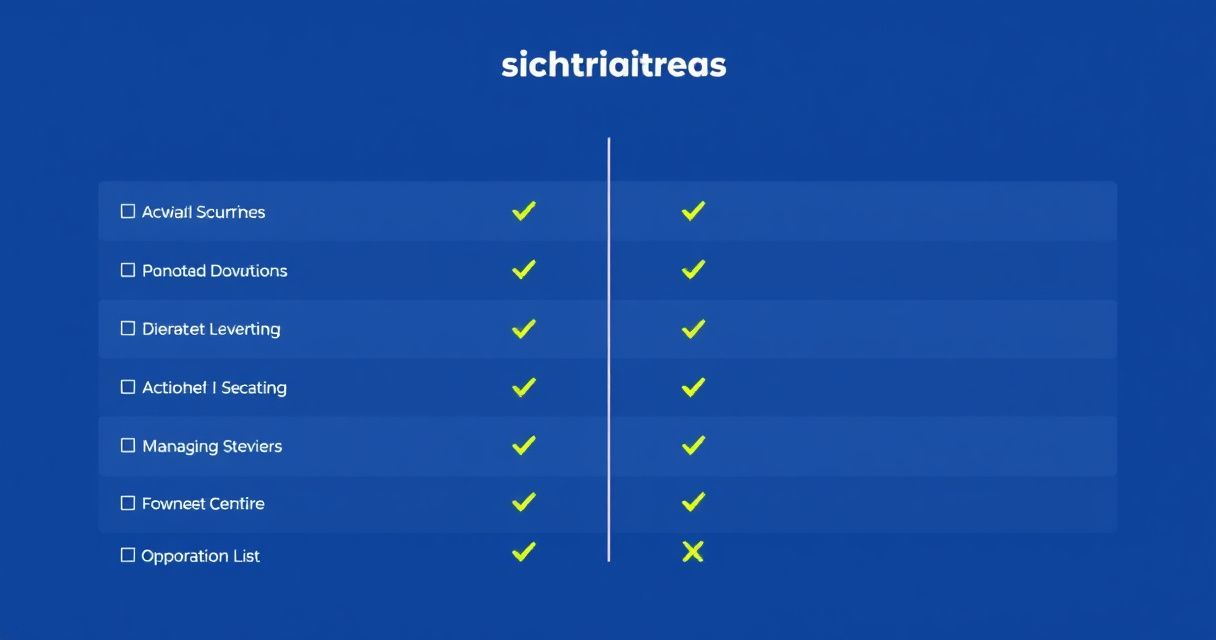
E2E Networks: What They Are and What They Do Well
E2E Networks is India’s most prominent homegrown cloud infrastructure provider. Listed on the NSE, they operate their own data centers and offer NVIDIA A100, H100, and L40S GPUs alongside traditional cloud VMs, block storage, and Kubernetes clusters. They are one of a small number of Indian companies with direct NVIDIA allocation for datacenter GPUs.
What E2E does extremely well:
Raw GPU pricing. E2E offers some of the most competitive GPU pricing in India. Their H100 SXM instances, A100 80GB nodes, and L40S machines are priced below most international alternatives, and they bill in INR. For teams that need pure compute at the lowest possible unit cost, E2E is hard to beat.
Indian data residency. Every server sits in India. For workloads governed by DPDP Act requirements, RBI data localization rules, or enterprise procurement policies that mandate Indian hosting, E2E removes the compliance question entirely.
Self-serve provisioning. Their MyAccount dashboard lets you spin up GPU instances, cloud VMs, and storage volumes in minutes. API access is available for programmatic provisioning. If you know exactly what you need and just want it running fast, the self-serve experience is functional.
Financial transparency. As a publicly listed company, E2E publishes quarterly results. You can look at their revenue, margins, and capital expenditure. For enterprise procurement teams doing vendor risk assessment, this matters.
What E2E does not provide:
E2E is an infrastructure company. They sell you a server. Once it is provisioned, the operational responsibility is yours. That means:
- You manage CUDA drivers, container runtimes, and OS patching
- You configure monitoring, alerting, and log aggregation
- You handle security hardening, firewall rules, and intrusion detection
- You architect high availability, failover, and disaster recovery
- You troubleshoot at 3 AM when a training job fails or a node goes unresponsive
- You plan capacity, manage scaling, and optimize resource utilization
Their support team can help with provisioning issues and basic infrastructure questions. But they are not going to debug why your vLLM deployment is throwing CUDA out-of-memory errors, or why your Kubernetes ingress is dropping connections under load, or why your model inference latency spiked after a driver update.
This is not a criticism. It is their business model. E2E builds and sells infrastructure. What you do with it is your problem to solve.
ZenoCloud: What We Add on Top
ZenoCloud is a managed cloud operations company. We operate across 1,000+ servers globally, and we have been managing infrastructure for over 14 years (formerly as ServerGuy). Our team handles deployment, monitoring, security, scaling, and ongoing operations so that your engineering team can focus on building product instead of managing servers.
When you work with ZenoCloud, you are not buying a server. You are buying a team.
What that means in practice:
Deployment and configuration. We handle the initial setup: server provisioning, OS hardening, runtime installation, application deployment, DNS configuration, SSL certificates, CDN integration. You hand us the requirements, we hand you a running environment.
24/7 monitoring and incident response. Every server under ZenoCloud management runs Zabbix monitoring agents with custom thresholds for CPU, memory, disk, network, and application-specific metrics. Wazuh provides security event monitoring across all nodes. When something breaks at 2 AM, our team gets paged — not yours.
Security operations. WAF configuration, DDoS mitigation, malware scanning, vulnerability patching, intrusion detection, log analysis. We run Wazuh across 300+ agents, Imunify360 for proactive defense, and Sucuri for web application protection. Security is not an add-on we sell. It is baked into how we operate every server.
Scaling and capacity planning. When your traffic grows, we scale the infrastructure. When your GPU utilization patterns shift, we recommend configuration changes. When you need to burst to 8x H100s for a training run and scale back to 2x for inference, we handle the orchestration.
Vendor management. We work with E2E Networks, AWS, DigitalOcean, Hetzner, and other providers depending on what the workload demands. If E2E has availability issues on H100s, we can shift to LeapSwitch or CloudPe. You deal with one vendor (us), and we deal with the infrastructure layer.
A human you can call. Enterprise clients get a named account engineer. Priority support clients get Slack or WhatsApp access with 1-hour response times. When your CTO needs an answer about a production issue, they talk to an engineer, not a chatbot.
GPU Pricing: Direct vs Managed
This is where the numbers matter. E2E sells raw GPU compute. ZenoCloud sells managed GPU infrastructure. The price difference reflects the operational layer.
| GPU | E2E Networks (Self-Managed) | ZenoCloud (Managed) | Difference |
|---|---|---|---|
| H100 SXM 80GB | ~INR 280/hr | INR 249/hr (on-demand), INR 1,50,000/mo (dedicated) | ZenoCloud is comparable or lower on hourly, adds full management |
| A100 80GB | ~INR 180-220/hr | ~INR 200-250/hr managed | 10-20% premium includes monitoring, security, support |
| L40S 48GB | ~INR 120-150/hr | INR 150/hr (on-demand), INR 90,000/mo (dedicated) | Managed layer included at minimal premium |
| L4 24GB | ~INR 40-50/hr | INR 49/hr (on-demand), INR 30,000/mo (dedicated) | Near-identical pricing with management included |
Key observation: The pricing gap between self-managed E2E and managed ZenoCloud is narrower than you might expect. On some configurations, ZenoCloud’s negotiated rates with E2E (and other partners) bring the sticker price to parity or below. The managed layer — monitoring, security, support, scaling — comes at a 10-20% effective premium on larger configurations, and near-zero premium on smaller GPU instances.
For context, hiring a single DevOps engineer in India costs INR 1.5-3L per month. If your team does not already have someone who can manage CUDA environments, configure Kubernetes for GPU workloads, and handle production incidents, the ZenoCloud premium is a fraction of the alternative.
Cloud Servers and VPS: Beyond GPUs
The GPU comparison gets the most attention, but both companies also serve traditional cloud workloads: web applications, databases, API backends, SaaS infrastructure.
E2E Networks offers cloud VMs starting around INR 300-400/month for basic instances, scaling to dedicated servers with high-memory configurations. Their Kubernetes service (EKS-equivalent) allows container orchestration on their infrastructure. Pricing is competitive with DigitalOcean and Hetzner for raw compute.
ZenoCloud offers managed hosting starting at INR 12,000/month for the Starter tier. This includes the server, deployment, LiteSpeed web server, daily backups, Cloudflare CDN, SSL, basic security (Imunify360 + Sucuri), and email support with 8-hour response times. The Business tier at INR 25,000-50,000/month adds dedicated VPS resources, staging environments, Redis/Elasticsearch, and 4-hour priority support.
The price difference is stark and intentional. E2E sells you a VM for INR 400/month and you run everything yourself. ZenoCloud sells you a managed environment for INR 12,000/month and handles the operations. They are fundamentally different products aimed at different buyers.
| Need | E2E Networks | ZenoCloud |
|---|---|---|
| Run a side project | INR 300-500/mo VPS | Not the right fit (try DigitalOcean or Hetzner) |
| Production WordPress/WooCommerce | VPS + you manage the stack | Managed hosting from INR 12,000/mo |
| High-traffic e-commerce (Magento) | Dedicated server + your DevOps | Managed Pro tier from INR 55,000/mo |
| SaaS backend on AWS | Not applicable (E2E is own cloud) | Cloud Ops management from INR 30,000/mo |
| GPU training cluster | Self-managed GPU instances | Managed GPU with monitoring + support |
Support: The Real Differentiator
Support is where the managed vs. self-managed distinction becomes most visible.
E2E Networks support covers infrastructure-level issues: provisioning failures, network connectivity, hardware faults. Their team can help you get a server running. They will not help you configure Nginx, debug a PostgreSQL replication issue, or optimize your ML inference pipeline. Response times are standard for a self-serve platform — reasonable for non-urgent issues, slower during peak demand periods.
ZenoCloud support covers the full application stack. Our engineers troubleshoot web server configurations, database performance issues, caching layers, deployment pipelines, and GPU workload optimization. Support tiers range from 8-hour email response (Starter) to 15-minute P1 response with a named engineer on Slack (Enterprise). We have done this for 14 years across hundreds of clients and thousands of incidents.
The gap matters most at 2 AM when production is down. If you have an in-house DevOps team that can respond to incidents independently, E2E’s infrastructure-level support is sufficient. If your engineering team is focused on building product and does not want to carry a pager for infrastructure, ZenoCloud’s operational support becomes essential.
When to Go Directly to E2E Networks
E2E is the right choice when your team has the operational maturity to manage infrastructure independently. Specifically:
You have dedicated DevOps or platform engineering staff. At least one person on your team whose job description includes server management, monitoring configuration, security patching, and incident response. Not a developer who also does DevOps on the side — a dedicated infrastructure person.
You want maximum control over the stack. You have specific kernel configurations, custom networking setups, or non-standard software requirements that a managed provider would not accommodate. You want root access and total freedom.
You are optimizing purely for compute cost. Your workloads are batch-oriented (training jobs, data processing pipelines) where downtime is acceptable and you do not need someone watching the servers 24/7. If a job fails, you restart it. No customer is impacted.
You are building your own cloud platform. If you are a SaaS company building a multi-tenant platform and you need raw infrastructure to build on, E2E’s VMs and GPUs are building blocks, not finished products.
Your budget is below ZenoCloud’s minimum. ZenoCloud’s managed tiers start at INR 12,000/month. If you need a INR 400/month VM to run a development environment or a personal project, E2E (or DigitalOcean, or Hetzner) is the right answer. ZenoCloud is not trying to serve that market.
When to Use ZenoCloud
ZenoCloud makes sense when the operational cost of managing infrastructure yourself exceeds the premium of having someone else do it. That describes more companies than most CTOs want to admit.
You do not have a DevOps team (or your DevOps team is already overloaded). Most startups between 5-50 engineers have zero to one infrastructure person. That person is already managing CI/CD, developer environments, and production deployments. Adding GPU workload management, security operations, and 24/7 monitoring to their plate is how you get burnout and outages.
You are deploying AI models to production. Inference workloads serving real users demand reliability, monitoring, auto-scaling, and incident response. A training job that crashes is annoying. An inference endpoint that goes down costs you customers. ZenoCloud’s managed GPU infrastructure is built for production workloads, not just experimentation.
You need security and compliance without building a security team. DPDP Act compliance, SOC 2 preparation, vulnerability management, WAF configuration, and intrusion detection require specialized knowledge. ZenoCloud’s security stack (Wazuh, Imunify360, Sucuri, managed WAF) delivers enterprise-grade security operations without hiring a dedicated security engineer.
Your cloud bill is growing and nobody is optimizing it. ZenoCloud’s Cloud Ops tier starts with a free FinOps audit. We have seen companies cut 20-40% from their AWS or cloud spend just from right-sizing, reserved instance optimization, and architecture cleanup. The management fee often pays for itself from the savings.
You want one throat to choke. When you manage your own E2E infrastructure and something goes wrong, you troubleshoot. If it is a hardware issue, you contact E2E. If it is a software issue, you fix it. If it is a network issue, you figure out whose problem it is. With ZenoCloud, you contact us. We figure out where the problem is and fix it. One vendor, one relationship, one escalation path.
The Partnership Reality
We want to be transparent about something that most comparison articles in this space gloss over: ZenoCloud is not trying to replace E2E Networks. We are a customer of theirs. We provision hardware from E2E (among other providers) and build managed services on top.
When E2E adds new GPU models, we can offer them to our clients with managed support on day one. When E2E opens new data center capacity, our clients benefit from additional availability. When E2E improves their networking or storage layer, our managed environments improve accordingly.
This is the same relationship that exists between AWS and the thousands of managed service providers who build on top of it. AWS sells infrastructure. MSPs sell operations. The customer chooses based on whether they want to manage the stack themselves or have someone else do it.
E2E Networks is excellent at what they do: building and operating cloud infrastructure in India at competitive prices. ZenoCloud is excellent at what we do: turning raw infrastructure into managed, monitored, secured environments that engineering teams can rely on without carrying operational burden.
Making the Decision
The choice between E2E Networks direct and ZenoCloud managed comes down to one question: does your team want to operate infrastructure, or does your team want to use infrastructure?
If your answer is “we want to operate” — you have the team, the processes, and the appetite for it — go to E2E directly. You will get competitive pricing, Indian data residency, and full control.
If your answer is “we want to use” — you want to deploy workloads, ship features, and focus on your core product — talk to ZenoCloud. You will pay a modest premium for the managed layer, and you will get that time back as engineering hours spent on product development instead of server management.
Both are legitimate choices. The wrong choice is pretending you want to operate when you actually need someone to operate for you. That path leads to under-monitored servers, unpatched vulnerabilities, and 3 AM production incidents that your application developer is not equipped to handle.
Choose accordingly.